
大丈夫
China’s top pork-producing province rolls out homegrown 'gene chip' for breeding quality pigs_我的网站

一 | 8月21日至23日,以“匠心筑梦 智启新程”为主题的浙江省第二届职工创新交流活动在杭州国际博览中心举行。
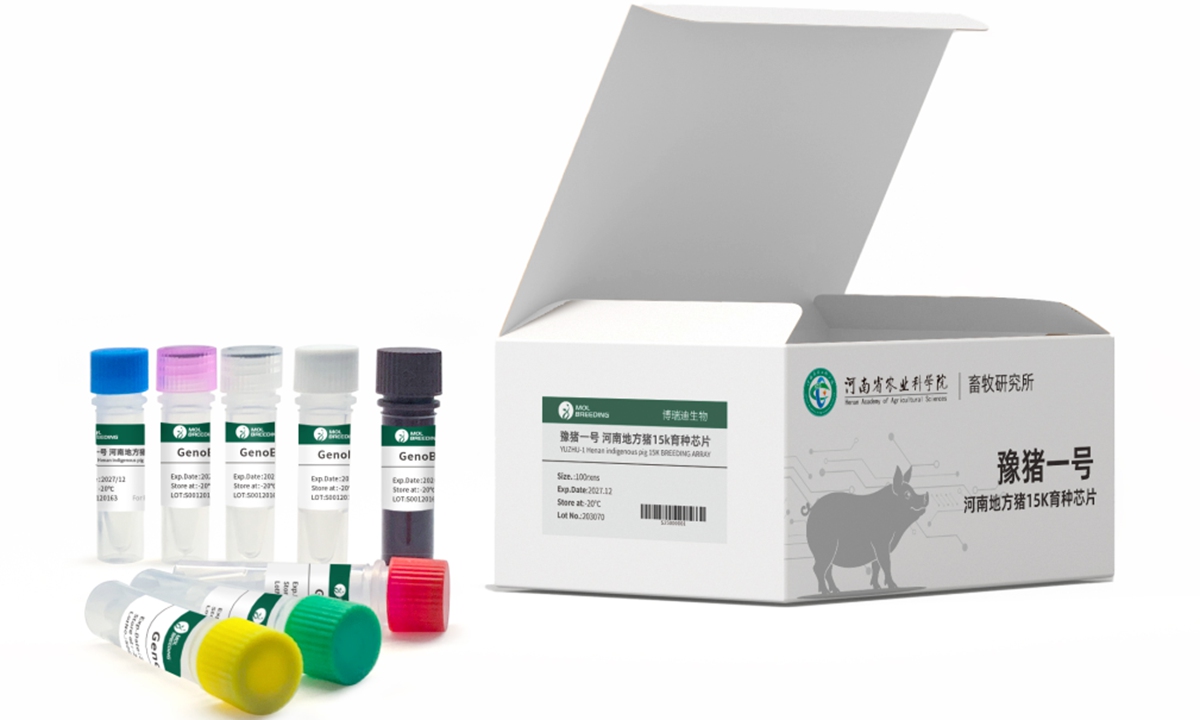
China's largest pork-producing province has introduced a genomic breeding tool designed for indigenous pig breeding, a sign that the province is shifting from expanding volume toward improving hog quality.
The Henan Academy of Agricultural Sciences announced the launch of Yuzhu-1 Henan indigenous pig 15k breeding array - commonly known as a gene chip - developed by the pig breeding team at its Institute of Animal Husbandry and Veterinary Science. It is the first such tool customized for the province's native pig stock, the institute said on Monday.
Henan is home to multiple native pig breeds prized by consumers for their good flavor. However, they carry a commercial burden compared with imported lean-meat breeds, as they grow more slowly, consume more feed per kilogram of weight gain and deliver thinner margins, noted Xing Baosong, head of the pig research office at the institute.
Lifting those hurdles depends on sharper selection, which in local herds has long relied on visual assessment of physical traits, which is slow and imprecise. Genomic tools can speed things up, but mainstream commercial chips were built on imported breeds and lose accuracy on native Chinese stock. Yuzhu No 1 instead draws on whole-genome resequencing data from five of Henan's native pig breeds and two locally bred lines.
"In breeding we rely on estimated breeding values to judge an animal's genetic potential," Wang Ligang, a professor at the Institute of Animal Sciences under the Chinese Academy of Agricultural Sciences, told the Global Times on Monday. "An array matched to the breed makes that estimate more accurate. Previously there was a real chance we were selecting the wrong animals. Now we are far more likely to be selecting the right ones - and to select accurately for the traits a breed is known for, whether that is tender meat or high fertility."
The efficiency gap between native and imported pig breeds remains wide, said Wang, who is also with the Pig Branch of the Chinese Association of Animal Science and Veterinary Medicine. Feed conversion ratios for local Chinese pigs run around 3.0, against below 2.5 for imported breeds, while reaching 100 kilograms takes native pigs 180 to 190 days compared with 130 to 140 days for exotic lines, he said.
Despite this, China's native pig breeds have their advantages.
"Our pigs taste better, partly because they are raised longer," Wang said. "And they are far more robust. Exotic breeds can suffer heat stress and die in summer; when disease hits, they can go down in large numbers. Local pigs rarely do. They tend to recover. Some breeds in Northeast China can even tolerate severe cold."
He added that imported breeds drive efficiency, while native breeds ensure quality and offer a reservoir of genetic diversity for disease and stress resistance - traits that can be bred back into commercial lines.
The province slaughtered 64.74 million pigs in 2025, up 7.4 percent year on year, with pork output at 5.22 million tons, according to the provincial statistics bureau, making it the top pork and pig producer nationwide, according to industry statistics.
In the first half of 2026, pig slaughter in the province rose a further 6.4 percent, accelerating 5.3 percentage points from the first quarter, against national growth of 1.7 percent. Xing said that more high-quality local black pigs will reach the market as Yuzhu No 1 is applied more broadly.
Other major pig production provinces such as Southwest China's Sichuan, Northwest China's Shaanxi and South China's Yunnan have all developed their own arrays.
"Provinces with the most developed pig production are the ones pushing upmarket," Wang said. "Scale is no longer the only measure. If every province reaches this level, a pattern of one dedicated array per province could gradually take shape for China's native breeds."
。为期三天的活动,集中展示了全省职工立足岗位创新创造的丰硕成果,勾勒出AI时代产业工人技能转型的清晰路径。活动紧扣我省“415X”先进制造业、数字经济等产业,设置七大主题交流区,涵盖了新能源汽车及零部件、视觉智能与网络通信、绿色石化与新材料等万亿级产业集群。由杭州市总工会承办的“视觉智能和网络通信产业交流区”以“慧眼万象 匠心致远”为主题,吸引了不少观众驻足。AI健康魔镜站定30秒即可生成30余项身体指标报告,哈浮飞行相机比可乐还轻、无需摇柄即可智能跟拍,乐奇AI眼镜仅49克、可导航提词拍照并接入国产大模型,全球首款成年人治愈陪伴AI情感机器人bibo……一系列前沿创新成果让展区变身“科技游乐园”,体验者络绎不绝。

二 | 在人群中不乏年轻的面孔。西湖大学AI医学方向学生小谢在AI健康魔镜前停留了很久,逐项查看产品对应的各项身体健康状况指标的实现分析能力。听朋友介绍这场展览后,他特意赶来,“主要想看看AI技术在产业一线是怎么应用的”。记者跟随他的步伐,一起参观了无线一体式人像三维扫描仪、胸腹腔内窥镜手术机器人等展品。由于这些产品与他的研究方向密切相关,他看得很仔细,也不时向工作人员提问。“平时在实验室里接触的更多是数据和模型,在这里能看到它们怎样变成产品,感受确实不一样。”对他来说,这是逛展最有吸引力的地方。展区内,全国五一劳动奖章获得者陈晓军、省劳模朱小明和岑曙炜、杭州工匠周军等也来到现场分享攻关历程,同时运用数字人技术为劳模工匠打造的“数字分身”,则提供全天候讲解服务,让劳模精神与前沿科技在此交相辉映。

三 | 活动现场还开设了“人工智能+”学习行动杭州站。“线上+线下”双轨学习通道为全市职工提供了便捷的学习渠道——线上课程面向到场职工免费开放,现场大屏滚动播放以往的课程内容;线下则是简洁醒目的展板,上面列着近期的培训列表。

四 | “以往我也参加过几次市总工会举办的‘新质课堂’,特别是AIGC的内容,让我在图文设计、视频创作方面精进和省力不少。”从事新媒体行业的徐先生告诉记者,后续有相关的培训课程还会继续报名学习。现场,像他这样在展板前认真“做功课”的职工还有不少。活动现场还宣布了浙江省第二届职工优秀技术创新成果,来自万向一二三股份公司的韩笑博士带领职工创新团队完成的“超高功率宽温域多元电芯技术项目”是杭州斩获的两项一等成果之一。

五 | 韩笑说,“我们希望做到的不只是让中国电池跑在F1赛道上,更是把在世界顶级赛场验证过的中国技术,带到更广阔的全球高端市场。”该项目源自F1方程式赛车极致动力的核心需求,聚焦行业瓶颈,创新研发多项原创核心技术,成功搭建圆柱、软包两大超高功率电芯技术平台,实现了中国高功率动力电池从顶级赛事赛道,走向高端产业化应用的跨越式升级。活动期间,西子洁能特级技师葛小青等十余名大国工匠也来到活动现场,与广大市民、职工、学子面对面交流。“大国工匠助企浙江行”活动同步开启,32名大国工匠组成5支服务队,分赴杭州、湖州、嘉兴、金华等地开展精准助企服务。
Current article:http://t6z.miaorediancuisuilianzouguang.cyou/19ge/f94kb.html
Published on:18:47:28
栏目相关
- 再次斩获两大发明展览会金奖 香江1号新质人居技术闪耀第十二届国际发明展览会
- 斯诺克世锦赛:赵心童10-4击败上届亚军杰克-琼斯晋级16强
- China imposes anti-dumping tariffs of up to 54.3 % on US, Mexican pecans in form of deposits: MOFCOM
- 热门中概股美股盘前普跌,网易跌近3%
- 5年1.25亿,布劳恩的合同,到底是怎么签下的?
- 市场监管总局发布酱香型白酒掺杂食用酒精筛查检验方法
- 走进“七夕赴佳约·汉东觅知音”青年人才联谊活动
- 新一代通信网建设提速 空天地海全域发力
- 你是说,在这款游戏里哈基米在打牌玩俄罗斯轮盘?
- Booker Prize goes to Sri Lakan author
- LUNA SEA真矢さん急死 妻・石黒彩 大きなショックの中で喪主務めた 闘病の夫を最後まで支え
- 以日为鉴
热门排行
- 国补8月继续申领!国补政策2026年最新消息:第三批国补持续到9月底,买手机平板电脑3C数码电脑空调家电补贴15%,京东学生开学季优惠能省千元!
- 急成啥样了,“不能落后中国,一刻都不行”
- “中国机器人技术处于世界前沿,其他国家没有这样的水平”
- 美媒:076最让人担忧的不是电磁弹射,而是其恐怖的生产速度!
- 出行注意!抚顺这一路段有施工,完工时间→
- 高德顺风车遇乘客约好高速费下车就不认
- PriceSeek提醒:8月前三周巴西大豆出口同比偏快
- 马斯克计划明年发射AI卫星!相关概念股梳理
- 一边坦途一边幸福!邯郸这个路口凭什么让全网奔赴
- “数”说抚顺:田畴沃野尽“丰”景
- 【园所动态】卫生保健护成长,质控督导促提升——-长沙市开福区钱隆世家幼儿园、钱隆幼儿园迎接托幼机构卫生保健质量控制检查
- 2026科隆展直播前瞻:全球大厂放大招!海量新作实机抢先看